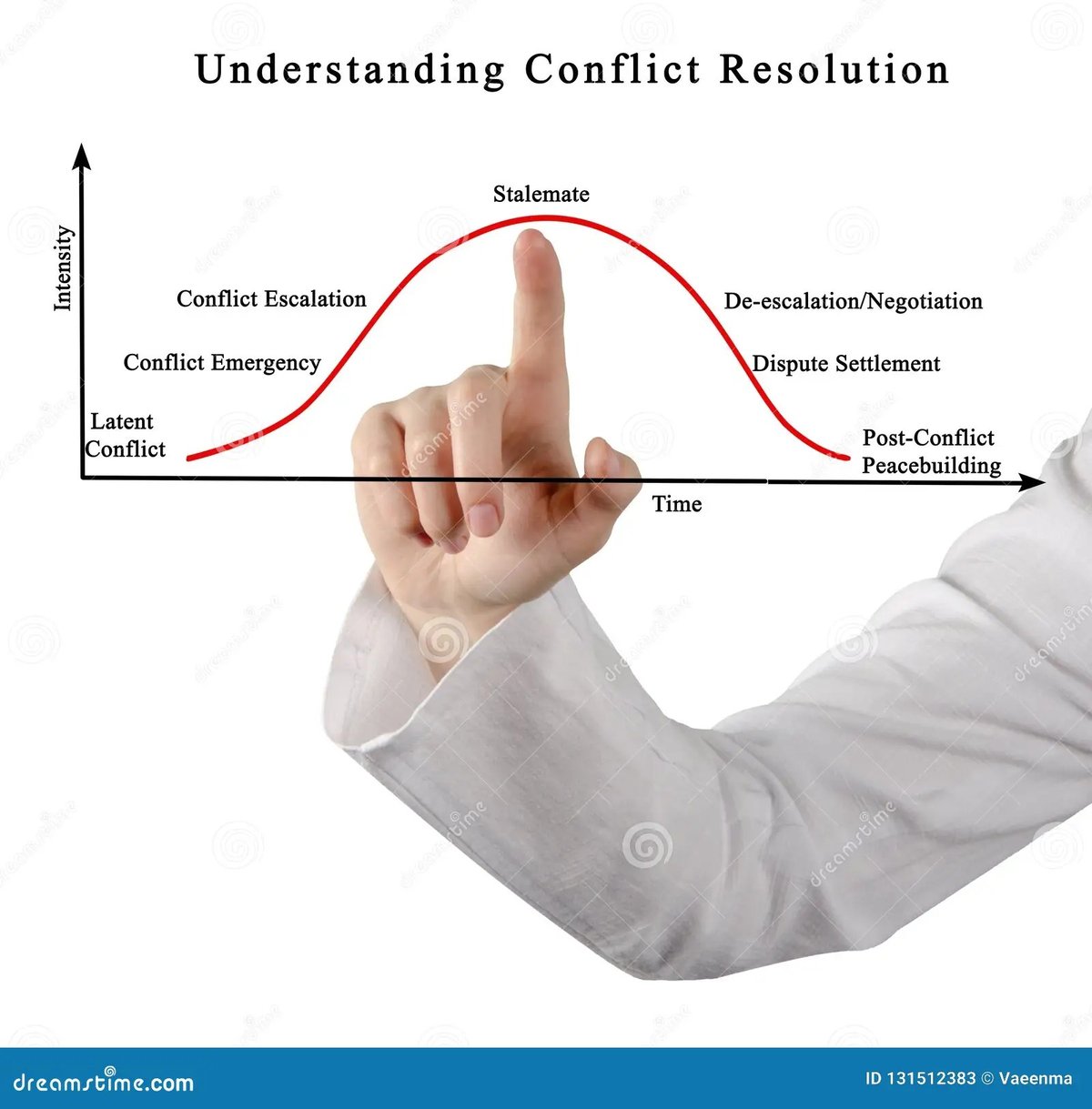
In any human endeavor, from a busy household to a global corporation, differences are inevitable. They are, in fact, the very wellspring of innovation and growth. Yet, these differences often manifest as conflict – moments of friction that can either forge stronger bonds or fracture relationships. The secret isn't to avoid conflict, but to master the art of navigating it. That's where Conflict Resolution & Understanding Differences steps in, not as a quick fix, but as a vital skill set for building resilient, respectful, and productive environments.
This isn't about glossing over disagreements; it's about transforming tension into opportunity. It's about recognizing that beneath every argument lies an unmet need, a differing perspective, or a misunderstanding waiting to be illuminated. By learning to approach these moments with skill and empathy, you unlock the potential for deeper understanding, more robust solutions, and genuinely stronger connections.
At a Glance: What You'll Discover
- Conflict is Natural: It's an inherent part of human interaction and can be a catalyst for growth if managed well.
- The Power of Resolution: Effectively resolving conflict boosts productivity, morale, and strengthens relationships.
- Understand Its Roots: Learn about different types of conflict and their common causes to address issues at their source.
- A Step-by-Step Approach: Follow a clear process to acknowledge, explore, and resolve disagreements respectfully.
- Master Your Style: Identify your natural conflict resolution style and learn to adapt it for better outcomes.
- Communication is Key: Develop active listening and empathetic dialogue skills to bridge divides.
- Cultural Nuances Matter: Recognize how cultural differences impact conflict and learn strategies for global teams.
- Prevention is Possible: Implement proactive strategies to foster a harmonious environment and reduce future conflicts.
Why Differences Don't Have to Divide Us: The Power of Conflict Resolution
It sounds almost too simple: differences are everywhere. From how you load the dishwasher to how a multinational team strategizes a product launch, varied opinions and approaches are constants. But what happens when those differences become roadblocks? When they fester into frustration, resentment, or open dispute?
That's the critical juncture where conflict resolution becomes indispensable. At its core, conflict resolution is the process of respectfully, fairly, and productively resolving disagreements between individuals or groups. It's about digging deeper to identify underlying causes, encouraging open and honest dialogue, and collaboratively finding solutions that work for everyone involved. The ultimate goal isn't just to stop an argument, but to transform it into a moment of growth, ensuring relationships remain positive and environments stay harmonious.
The Transformative Impact: Why It Matters to Everyone
Think of conflict resolution as the connective tissue that holds teams and relationships together, even under strain. Its importance ripples outwards, benefiting individuals, teams, and entire organizations.
For You, Your Team, and Your Organization:
- Prevents Escalation: Small issues, left unaddressed, can spiral into major crises. Effective resolution catches them early, before they become destructive.
- Improves Communication: The process demands respectful expression and active listening, honing essential communication skills that carry over into all interactions.
- Fosters Collaboration: When conflict is handled constructively, trust is built. Teams learn they can navigate tough conversations and still work towards common goals, enhancing collaboration.
- Promotes a Healthy Culture: A workplace where conflict is managed well is a safe, open, and inclusive space. People feel comfortable sharing ideas, knowing their voice matters.
- Enhances Satisfaction & Reduces Stress: Employees feel heard and valued, leading to increased job satisfaction. Knowing there are tools and processes to address issues reduces the anxiety and stress often associated with workplace tensions.
- Boosts Productivity & Innovation: Less time spent on internal squabbles means more time focused on meaningful work. Diverse perspectives, when respectfully debated and resolved, often lead to more creative and robust solutions.
- Supports Retention & Loyalty: When individuals feel valued and supported through disagreements, they're more likely to stay with an organization, building loyalty and reducing costly turnover.
- Enhances Leadership Reputation: Leaders who skillfully navigate conflict demonstrate fairness, empathy, and strength, earning the respect of their teams.
The truth is, conflict isn't just an inconvenience; it's an opportunity. When understood and managed properly, it can be a powerful catalyst for personal growth, stronger team dynamics, and increased organizational resilience.
Decoding Discord: Understanding the Roots of Conflict
To resolve conflict effectively, you first need to understand it. What exactly is it, and what are its common manifestations? Conflict isn't always a dramatic shouting match; it often simmers beneath the surface, silently eroding trust and productivity.
More Than Just a Disagreement: Understanding the Nature of Conflict
Conflict is a natural, inevitable part of human interaction, especially in diverse environments like a workplace. It stems from differing opinions, approaches, values, and even personal styles. When seen as an opportunity for dialogue and understanding, it can spur growth and positive change. But left unaddressed, it becomes a corrosive force, causing negative outcomes.
The Many Faces of Workplace Friction: Types of Conflict
Not all conflicts are the same, and understanding their different forms can help you tailor your approach:
- Interpersonal Conflict: This is often what we think of first – clashes between individuals due to personality differences, communication styles, or simply not "clicking."
- Task-Based Conflict: Disagreements arise over how work should be performed, priorities, responsibilities, or the best strategy to achieve a goal. It's about the work itself.
- Value Conflict: This runs deeper, involving differing beliefs, ethical standards, or core principles. These can be particularly challenging as they touch on deeply held convictions.
- Organizational Conflict: Disputes over company policies, procedures, resource allocation, or even the overall strategic direction. These often involve systemic issues.
- Role Conflict: Occurs when there's ambiguity, overlap, or disagreement about job responsibilities, expectations, or the scope of one's role within a team or organization.
Common Culprits: What Ignites the Spark?
While specific situations vary, most conflicts can be traced back to a few common causes:
- Communication Breakdowns: Misunderstandings, lack of clarity, assumptions, or simply not listening effectively are perhaps the most frequent instigators.
- Personality Clashes: When two individuals with very different temperaments or interaction styles struggle to work together harmoniously.
- Differences in Work Style: One person prefers meticulous planning, another thrives on spontaneity; one is a morning person, another a night owl. These differences can create friction.
- Unclear Expectations and Roles: When team members don't know who is responsible for what, or what the desired outcome truly is, conflict is almost guaranteed.
- Competition for Resources: Limited budgets, staffing, or time can pit individuals or departments against each other.
- Organizational Change: Restructuring, new leadership, or shifts in priorities can create uncertainty and resistance, leading to conflict.
The High Cost of Unresolved Issues
Ignoring conflict doesn't make it disappear; it simply allows it to metastasize. The impact of unresolved conflict can be severe:
- Decreased Team Cohesion: Trust erodes, alliances form, and the "we" dissolves into "us vs. them."
- Lowered Morale: A tense environment is an unhappy environment. People become disengaged and demotivated.
- Decreased Productivity: Energy is diverted from work tasks to managing grudges, navigating awkward social dynamics, or complaining.
- Increased Turnover: Top talent often leaves toxic environments, seeking places where they feel respected and heard.
- Damaged Relationships and Trust: The long-term effects can be lasting, making future collaboration difficult, if not impossible.
Understanding these dynamics is the first step toward effective resolution. Once you know what you're dealing with, you can choose the right tools to address it.
Navigating the Storm: A Step-by-Step Path to Resolution
When conflict arises, having a clear process can transform a potentially chaotic situation into a structured, productive dialogue. This step-by-step approach guides you toward mutually acceptable solutions.
The Conflict Resolution Process: Your Roadmap
- Acknowledge the Issue: The first, crucial step is to recognize that a problem exists. This isn't about assigning blame but about validating that something feels wrong and needs attention. Ignoring it is never a viable long-term strategy.
- Identify the Underlying Needs: Move beyond the surface-level complaint. What are the deeper motivations, fears, and concerns of each party? Often, what people say they want isn't what they truly need. For example, a demand for "more time" might really be a need for "better resources" or "clearer priorities."
- Generate Possible Solutions: Once needs are understood, brainstorm collaboratively. Encourage all parties to contribute ideas without immediate judgment. The goal here is quantity and creativity, not perfection. Think "how might we?"
- Evaluate the Options: Now, critically assess the generated solutions. Consider the pros and cons of each, their fairness, feasibility, and long-term effects. Will this solution truly meet the underlying needs? Is it sustainable?
- Agree on a Solution: Select the option (or combination of options) that best addresses the identified needs of all parties. Ensure mutual understanding and establish clear expectations about who will do what, and by when. Write it down if necessary.
- Follow Through and Monitor Progress: An agreement is only as good as its implementation. Check in regularly to ensure adherence to the agreed-upon solution and to assess its effectiveness. Be prepared to revisit and adjust if the initial solution isn't working as intended.
Setting the Stage for Success: Essential Elements
While the steps provide the framework, certain elements are crucial for making the process truly effective.
- Cultivating a Safe and Open Environment:
- Set Ground Rules: Agree on principles like respectful listening, allowing everyone to speak uninterrupted, and focusing on constructive dialogue rather than personal attacks.
- Choose Neutral Space: If possible, meet in a neutral location that doesn't confer advantage or disadvantage to either party.
- Foster Trust: Emphasize that the goal is mutual understanding and resolution, not "winning." Assure confidentiality where appropriate.
- The Art of Listening and Empathy:
- Give Full Attention: Put away distractions. Make eye contact. Show you are present.
- Avoid Interrupting: Let each person fully express their perspective before you respond.
- Paraphrase and Summarize: Reflect back what you hear to confirm understanding ("So, if I'm understanding correctly, you're concerned about X because Y?"). This also shows you were listening.
- Validate Emotions: Acknowledge feelings without necessarily agreeing with the content of the complaint. "I can see why you're feeling frustrated about this situation" can de-escalate tension significantly. It doesn't mean you agree the frustration is justified, just that you recognize the emotion.
- Steering Towards Solutions, Not Blame:
- Acknowledge Feelings Without Letting Them Dominate: Validate emotions, but gently guide the conversation back to the issue at hand and future-focused solutions.
- Maintain Emotional Neutrality: Even if you feel strongly, try to remain calm and objective. Your composure can help regulate the emotional intensity of the room.
- Direct Conversation Toward Solutions: Use open-ended questions like "What do you think would help improve this?" or "What steps can we take to move forward?" instead of dwelling on "Who is at fault?"
By consciously integrating these elements, you not only resolve the immediate conflict but also strengthen the underlying relationships and build a foundation for more effective communication in the future.
Your Conflict Compass: Understanding Resolution Styles
Just as people have different communication preferences, they also have distinct ways of approaching conflict. Recognizing your own style, and being able to identify others', is a powerful tool for effective resolution.
Which Style Suits the Situation?
There are five primary conflict resolution styles, each with its own advantages and disadvantages, depending on the context:
- Avoiding (Turtle): This style involves sidestepping the conflict entirely, often by delaying, ignoring, or withdrawing.
- When useful: For minor issues that aren't worth the fight, when emotions are high and a cool-down period is needed, or when someone else can resolve the issue more effectively.
- Pitfall: Leaves underlying issues unresolved, can lead to resentment, and may make problems worse in the long run.
- Accommodating (Teddy Bear): Prioritizing others' needs and concerns over your own, often by giving in or being overly cooperative.
- When useful: For trivial issues, when maintaining a relationship is more important than the specific outcome, when you realize you're wrong, or when you have little power but others have strong preferences.
- Pitfall: Can lead to resentment, being taken advantage of, and your own needs consistently going unmet.
- Competing (Shark): An assertive, win/lose approach where you push for your own concerns at the expense of others.
- When useful: For quick, decisive action (e.g., in emergencies), when non-negotiable issues are at stake (ethics, safety), or when you're sure you're right and the stakes are high.
- Pitfall: Can damage relationships, create hostility, and lead to others feeling unheard and disrespected.
- Collaborating (Owl): Seeking a win-win solution that fully satisfies the concerns of all parties involved. This is often the most constructive approach.
- When useful: For complex issues where an innovative solution is needed, when commitment from all parties is crucial, or when maintaining long-term relationships and trust is paramount.
- Pitfall: Can be time-consuming and emotionally exhausting, requires high trust and open communication, and may not be feasible for all conflicts.
- Compromising (Fox): Finding a middle ground where each party makes concessions to achieve a partially satisfying solution. It's a "give a little, get a little" approach.
- When useful: When goals are moderately important but not worth a full collaboration effort, when time is limited, or when previous attempts at competing or collaborating have failed.
- Pitfall: Solutions may not be ideal for anyone, and important underlying issues might not be fully addressed.
Mastering Your Approach: Actionable Insights
- Recognize Your Own Style: Take a moment to reflect. How do you typically react to conflict? Are you a "shark" who dives straight in, or a "turtle" who pulls back? Understanding your default helps you consciously choose different approaches.
- Adapt to Others' Styles: If you know a colleague is typically an "accommodator," you might need to actively encourage them to voice their needs. If someone is a "competitor," you might need to set clearer boundaries or emphasize collaboration from the outset.
- Encourage Flexible Approaches: A healthy team isn't one where everyone uses the same style, but one where members are flexible enough to choose the most appropriate style for the specific conflict at hand. Provide training and opportunities to practice assertiveness, embrace compromise, or learn collaborative negotiation skills.
By developing this "conflict intelligence," you move beyond reactive responses to become a strategic, thoughtful participant in resolving disagreements.
Bridging the Gaps: Communication as Your Superpower
At the heart of almost every conflict, and every successful resolution, lies communication. It's not just about speaking, but about truly hearing and being heard. Sharpening these skills is paramount.
Speaking to Be Understood, Listening to Understand
- Active Listening: This goes beyond just hearing words. It means giving your full attention, seeking to understand the speaker's perspective and feelings, and reflecting back what you've heard. "So, what I'm hearing is that you feel overwhelmed by the new project timelines, and you're worried about missing deadlines, is that right?"
- Use of "I" Statements: Frame your concerns around your own feelings and experiences, rather than accusatory "you" statements. Instead of "You always leave things to the last minute," try "I feel stressed when deadlines are tight because I worry about the quality of the final product."
- Empathy: Try to put yourself in the other person's shoes. How might they be feeling? What might their motivations be? Even if you don't agree with their actions, acknowledging their perspective can open doors.
- Nonverbal Communication Awareness: Pay attention to body language, tone of voice, and facial expressions – both yours and theirs. They often convey more than words. A tense posture or folded arms can signal defensiveness, even if the words are calm.
- Clarification and Summarization: Don't assume you understand. Ask clarifying questions ("Can you give me an example?"). Summarize periodically to ensure everyone is on the same page.
- Staying Focused on the Issue: It's easy for conflicts to broaden and bring in past grievances. Gently but firmly steer the conversation back to the specific problem at hand.
- Constructive Feedback: When giving feedback that might be part of a conflict, focus on behavior and impact, not personal traits. Offer solutions or suggestions for improvement.
- Patience: Conflict resolution isn't always quick. It requires time, effort, and a willingness to navigate discomfort. Don't rush the process.
Real-World Scenarios: Putting Principles into Practice
Let's look at how these communication skills, combined with the resolution process, play out in common workplace conflicts:
- Miscommunication:
- Scenario: A project update email leads to confusion and missed deadlines because key information was unclear.
- Resolution: Instead of blaming, a team member uses an "I" statement: "I found the email confusing regarding who was responsible for X, and I ended up duplicating efforts." Active listening reveals others felt similarly. The team agrees on a new protocol for project communications, like a weekly check-in or a standardized template for updates.
- Personality Clash:
- Scenario: Two colleagues consistently irritate each other due to differing work habits – one is meticulous and quiet, the other spontaneous and loud.
- Resolution: A manager facilitates a constructive dialogue. Each person uses "I" statements to describe the impact of the other's style ("I find it hard to concentrate when there's background noise") rather than judging the person ("You're too loud"). They find compromises, like using headphones, scheduling focused quiet times, and having regular brief check-ins to prevent minor annoyances from escalating.
- Task Prioritization:
- Scenario: Two departments clash over which project gets priority and resource allocation.
- Resolution: A collaborative discussion is initiated, focusing on the underlying interests: one department emphasizes strategic importance, the other, immediate customer urgency. Using active listening, they understand each other's needs. They brainstorm adjusted timelines, share resources, and present a combined proposal that addresses both strategic and urgent needs, perhaps by phasing the projects or allocating a small, dedicated team to the most urgent parts of both.
- Manager-Employee Performance:
- Scenario: A manager is concerned about an employee's declining performance; the employee feels undervalued and unsupported.
- Resolution: The manager initiates an open, non-confrontational conversation, expressing concerns non-judgmentally ("I've noticed a change in X, and I want to understand what's happening"). The employee feels safe to voice their needs, perhaps lacking specific tools or resources, or feeling overloaded. Together, they agree on a support plan, realistic expectations, and regular check-ins, rebuilding trust.
- Resource Allocation:
- Scenario: Two product teams need the same limited engineering resource for their respective features, both claiming high priority.
- Resolution: A neutral third party (e.g., a senior leader or HR) mediates. They facilitate understanding of the trade-offs involved, prompting each team to explain the business impact of their request. Through a collaborative evaluation of options, they agree on a balanced compromise, perhaps prioritizing key features for an upcoming launch while deferring others, or sharing the resource on a time-sliced basis.
These examples highlight that effective conflict resolution isn't about avoiding tough conversations but approaching them with intention, empathy, and a toolkit of strong communication skills.
The Global Dimension: Resolving Conflict Across Cultures
In our increasingly interconnected world, global teams are the norm, not the exception. While they bring incredible diversity and innovation, they also introduce a unique layer of complexity to conflict: cultural differences. What might be a simple misunderstanding within one culture can become a significant conflict across others.
Beyond Borders: Why Culture is Key in Diverse Teams
Diverse global teams are powerful engines of innovation. However, they also face the inherent risk of cultural misunderstandings and conflicts. Effective conflict resolution in this context demands not just general communication skills, but a deep understanding and appreciation of cultural nuances. It's about leveraging differences as strengths, rather than allowing them to become liabilities. A Harvard Business Review study strikingly found that 60% of conflicts in multinational teams are attributed to cultural differences.
Hofstede's Dimensions: Your Cultural Cheat Sheet
Geert Hofstede’s Cultural Dimensions Theory provides a foundational framework for understanding how national cultures impact behavior and, consequently, conflict. Here are his six dimensions:
- Power Distance: How much a culture accepts and expects unequal distribution of power.
- Example: In high power distance cultures (e.g., many Asian countries), subordinates may be less likely to openly challenge authority, preferring indirect communication. In low power distance cultures (e.g., Scandinavian countries), open dialogue and challenging superiors are more common.
- Individualism vs. Collectivism: The degree to which individuals are integrated into groups.
- Example: Individualistic cultures (e.g., USA) prioritize personal achievement and independence. Collectivistic cultures (e.g., Japan) emphasize group harmony and loyalty. Conflict in individualistic settings might be about personal rights, while in collectivistic settings, it might concern group reputation.
- Masculinity vs. Femininity: The distribution of emotional roles between genders. Masculine cultures value assertiveness, competition, and material success. Feminine cultures value cooperation, modesty, and quality of life.
- Example: Conflict in a masculine culture might be direct and competitive, focusing on winning. In a feminine culture, it might emphasize consensus and preserving relationships.
- Uncertainty Avoidance: A society's tolerance for uncertainty and ambiguity. High uncertainty avoidance cultures prefer strict rules and predictable situations.
- Example: Cultures with high uncertainty avoidance (e.g., Germany) may find ambiguous instructions or flexible timelines highly stressful, potentially leading to conflict over process.
- Long-term vs. Short-term Orientation: The focus on future rewards versus immediate results and tradition.
- Example: A long-term oriented culture (e.g., China) might prioritize slow, steady progress and enduring relationships, clashing with a short-term oriented culture (e.g., USA) focused on quarterly results.
- Indulgence vs. Restraint: The extent to which a society allows relatively free gratification of basic human drives related to enjoying life and having fun, versus suppressing gratification through strict social norms.
- Example: Indulgent cultures might be more open to expressing emotions in conflict, while restrained cultures might favor more reserved and controlled responses.
When Cultures Clash: Common Sources of Misunderstanding
Beyond Hofstede's dimensions, specific interaction styles often lead to friction:
- Communication Styles:
- Direct vs. Indirect: North Americans tend to be direct ("Here's the problem"). Japanese and many Asian cultures are more indirect, hinting at issues to save face.
- Decision-Making:
- Consensus-Driven vs. Individual Initiative: Some cultures (e.g., Japan) prefer slow, group-wide consensus before a decision is final. Others (e.g., USA) value individual initiative and quick decision-making.
- Attitudes Toward Time:
- Monochronic vs. Polychronic: Monochronic cultures (e.g., Germany) value punctuality and one task at a time. Polychronic cultures (e.g., India) are more flexible with time, allowing multiple tasks concurrently and prioritizing relationships over strict schedules.
- Conflict Avoidance:
- Many Asian cultures prioritize harmony and saving face, often avoiding direct confrontation. Western cultures, particularly the USA, may see direct confrontation as necessary for problem-solving.
The Steep Price of Ignoring Cultural Nuance
The risks of not addressing cultural conflict in global teams are significant, impacting every facet of an organization:
- Decreased Productivity and Efficiency
- Lower Employee Morale and Job Satisfaction
- Increased Turnover Rates
- Damage to Team Cohesion and Collaboration
- Negative Impact on Innovation and Creativity
- Compromised Quality of Work
- Reputational Damage
- Legal and Compliance Risks
- Loss of Competitive Advantage
- Inhibited Global Expansion
The Society for Human Resource Management (SHRM) reports that companies with effective cultural conflict resolution strategies boast 30% higher employee satisfaction and productivity levels, demonstrating a clear ROI for investing in cultural competence.
Strategies for Harmonious Global Teams
Managing cultural differences effectively requires a proactive, multi-pronged approach:
- Cultural Competence Training: Equip team members with the knowledge and skills to understand and respect diverse cultural norms, communication styles, and values.
- Inclusive Communication Practices: Encourage clear, explicit, and respectful communication. This might involve using multiple channels (written, verbal, visual), actively checking for understanding, and avoiding jargon or overly casual language.
- Diverse Leadership: Ensure that leaders are culturally sensitive, knowledgeable, and capable of mediating impartially. Diverse leadership also models inclusive behavior for the rest of the team.
- Mediation and Facilitation: For complex cultural disputes, bring in neutral, culturally competent third parties to facilitate dialogue and understanding.
- Team-building Activities: Design activities that foster trust, empathy, and cultural understanding, moving beyond mere social gatherings to include shared learning experiences.
- Clear Policies and Procedures: Establish guidelines that respect cultural differences and are consistently applied across all global operations, providing a framework for behavior and expectations.
A Success Story: The Multinational Tech Company
Consider a multinational tech company facing persistent conflicts between its North American and Asian offices. North American teams perceived their Asian counterparts as uncommunicative and passive, while Asian teams viewed North Americans as aggressive and disrespectful.
The company implemented a comprehensive strategy:
- Cultural Competence Training: All employees received training on Hofstede's dimensions and practical cross-cultural communication techniques.
- Revised Policies: Communication policies were updated to encourage more culturally sensitive approaches, explicitly outlining expectations for directness vs. indirectness in different contexts.
- Virtual Team-building: Facilitated virtual team-building activities focused on shared goals and personal storytelling, fostering empathy and understanding.
The results were remarkable: a 40% reduction in inter-office conflicts and a 20% increase in overall team productivity. This case powerfully illustrates that cultural differences, when managed strategically, can be a profound source of strength rather than friction.
Proactive Peacekeeping: Strategies for Preventing Conflict
While knowing how to resolve conflict is crucial, preventing it from arising in the first place is even better. Many conflicts can be mitigated or avoided entirely by fostering a healthy, communicative environment.
Building a Culture of Understanding
- Set Clear Expectations: Ambiguity is a breeding ground for conflict. Clearly define roles, responsibilities, project goals, and performance metrics from the outset.
- Encourage Open Communication: Create channels and a culture where people feel safe and comfortable expressing ideas, concerns, and feedback without fear of reprisal. Regularly solicit input.
- Promote Respect and Inclusivity: Foster an environment where diversity is celebrated, and all individuals feel valued and respected, regardless of background or perspective. Challenge disrespect immediately.
- Provide Conflict Resolution Training: Equip everyone with the skills discussed in this guide – active listening, "I" statements, understanding conflict styles – before conflicts become entrenched.
- Encourage Collaboration: Design tasks and projects that require genuine teamwork, helping individuals build rapport and mutual understanding before high-stakes disagreements arise.
- Address Issues Early: Don't let small problems simmer. Encourage individuals and managers to address minor issues promptly and constructively before they escalate.
- Promote Work-Life Balance: Stress and burnout can exacerbate tensions. Support employees in maintaining a healthy balance to reduce irritability and emotional volatility.
- Create Clear Policies and Procedures: Have established guidelines for addressing common workplace issues, from harassment to grievance procedures. Ensure they are fair, transparent, and consistently applied.
- Lead by Example: Leaders and managers play a pivotal role. When they model effective communication, empathy, and constructive conflict resolution, it sets the tone for the entire organization.
By weaving these strategies into the fabric of your interactions and organizational culture, you create an environment where differences are more likely to be seen as assets than as sources of contention.
Cultivating Connection: Your Next Steps in Conflict Resolution
The journey toward mastering conflict resolution and understanding differences isn't a destination; it's a continuous practice. Every interaction, every disagreement, offers a new opportunity to refine your skills, deepen your empathy, and strengthen your connections.
Think of each conflict not as a problem to be avoided, but as a puzzle to be solved collaboratively, a chance to learn something new about yourself and others. It demands courage to lean into uncomfortable conversations, humility to acknowledge your own role, and patience to navigate complex human emotions.
Your commitment to these principles will not only transform how you handle disagreements but also profoundly enrich your relationships, foster more innovative teams, and contribute to a more harmonious world, one conversation at a time. Keep practicing, keep learning, and keep building those stronger connections. To dive deeper into how individuals and teams can thrive through effective communication and robust frameworks, Explore Dek and Thia.